Although elephants cannot speak like humans, they clearly communicate their emotions through body language. If you are planning an elephant conservation trip in Thailand, understanding these signals can make your journey safer, more meaningful, and truly respectful of nature.
Asian elephants are highly social animals with complex behaviors. They use their ears, tails, trunks, and voices to express emotions ranging from relaxation and curiosity to stress and warning signals. This article will introduce you to elephant body language in an easy-to-understand way, perfect for nature lovers and responsible travelers.
Elephant Ears, Natural Air Conditioners and Emotional Indicators
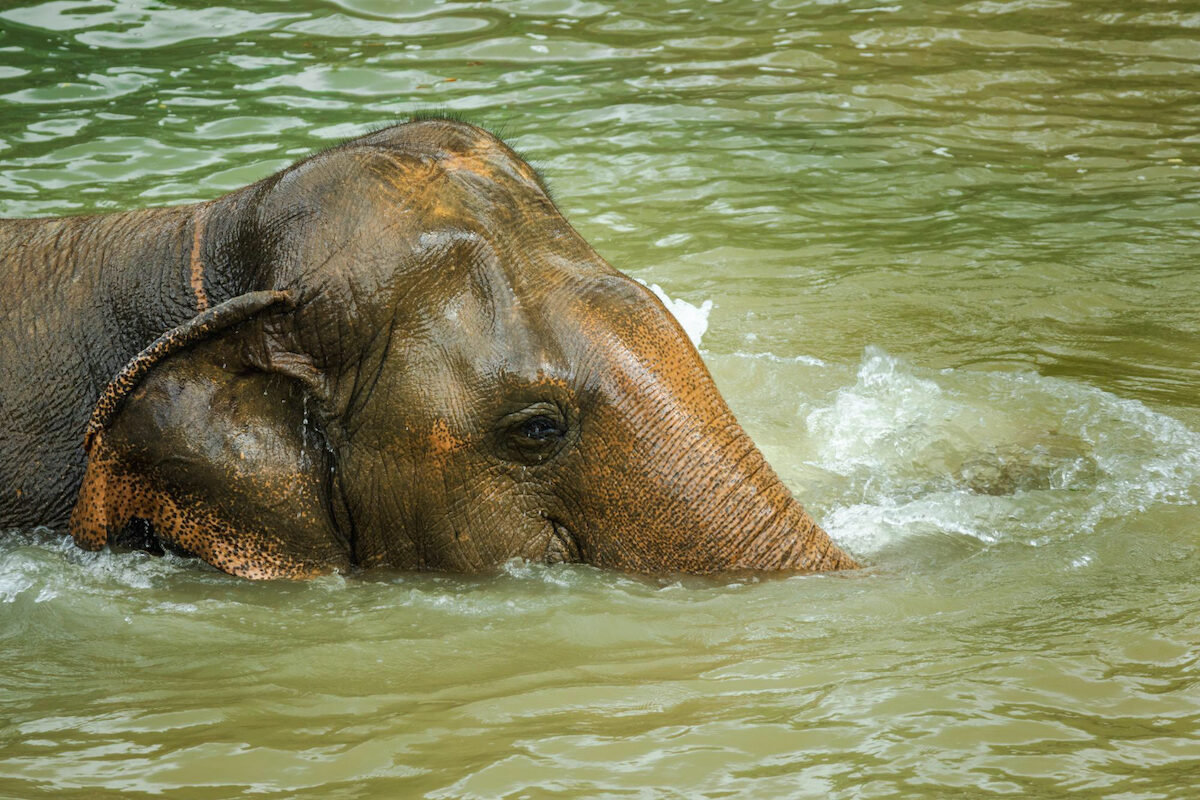
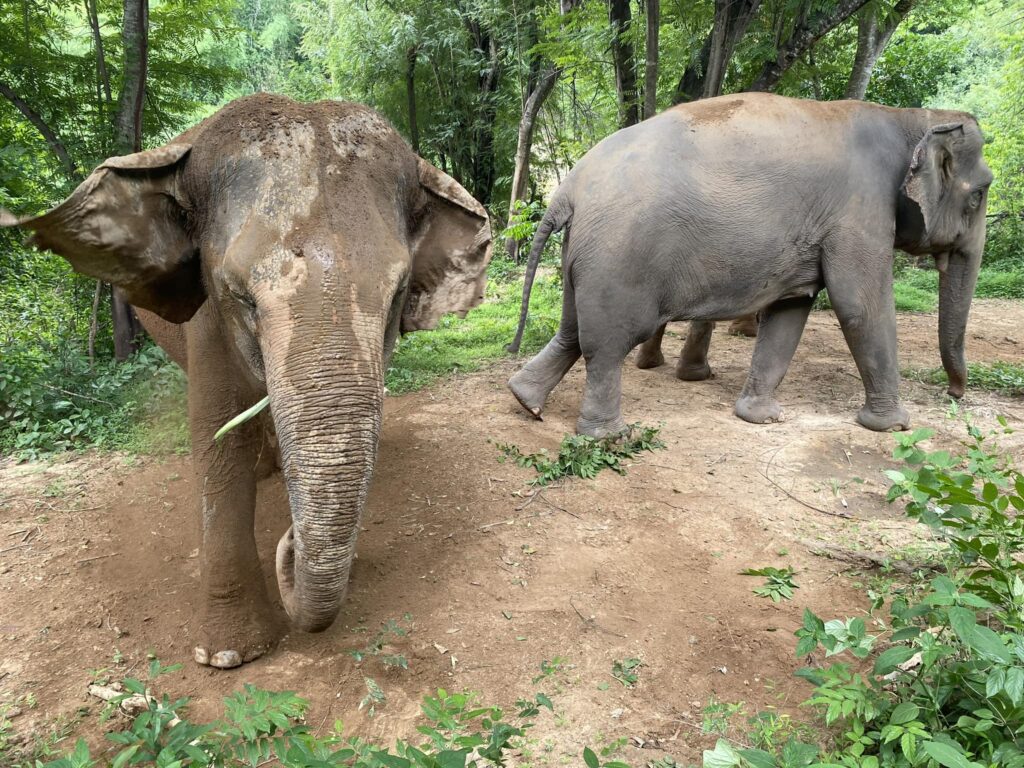
An elephant’s ears are not only for hearing. They also function as natural air conditioners, helping to release body heat in Thailand’s hot and humid climate. If you see an elephant standing calmly and gently flapping its ears, this is a sign of comfort and relaxation. The elephant feels safe and at ease with its surroundings.
However, if the ears are spread wide, stiff, and raised high, this is a warning sign. The elephant is alert and may feel threatened. This behavior often occurs when people get too close or when there are loud or unfamiliar noises. Visitors should slowly and calmly step back to give the elephant space and help it feel safe again.
Elephant Tails, From Relaxation to Tension
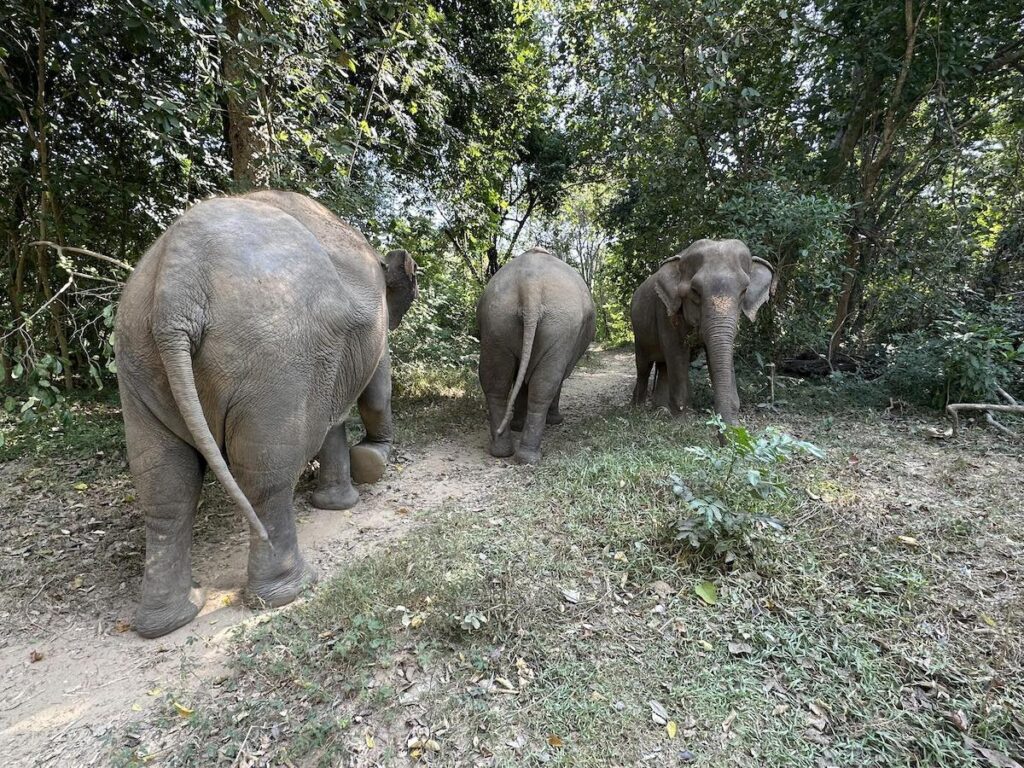
Although relatively small compared to their massive bodies, elephant tails are one of the easiest emotional signals to observe. A tail that swings slowly and rhythmically indicates calmness and contentment. This is an ideal moment to observe or take photos from a safe distance.
In contrast, a tail held straight, stiff, and raised signals heightened alertness. The elephant may be anxious, irritated, or frightened, especially in crowded or noisy environments. Caregivers at conservation sites often advise visitors that when this sign appears, all activities should pause and distance should be maintained to prevent accidents.
Elephant Trunks, Tools for Exploring the World and You
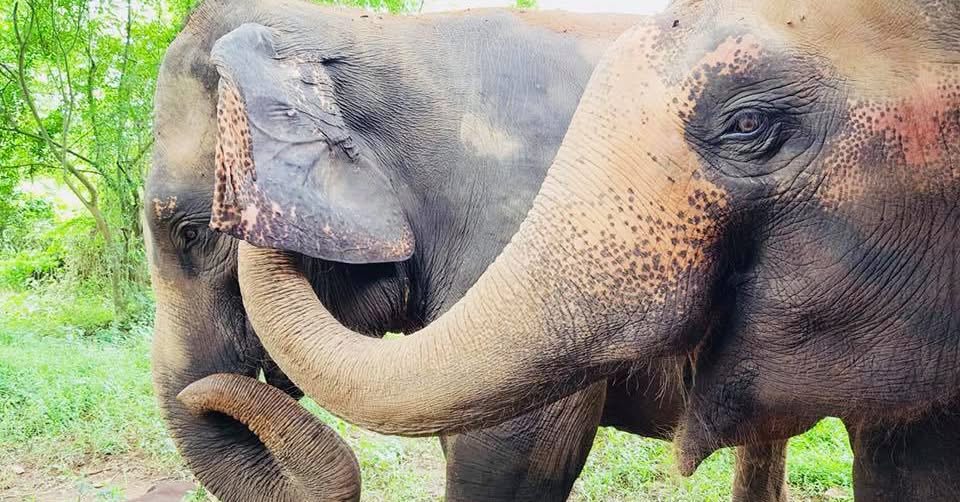
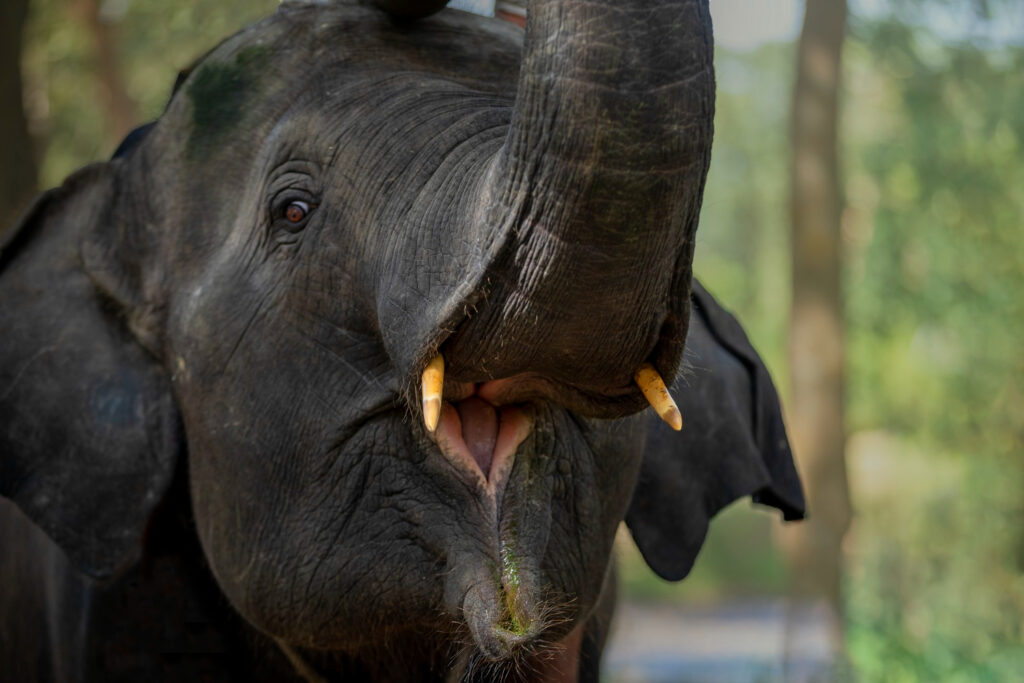
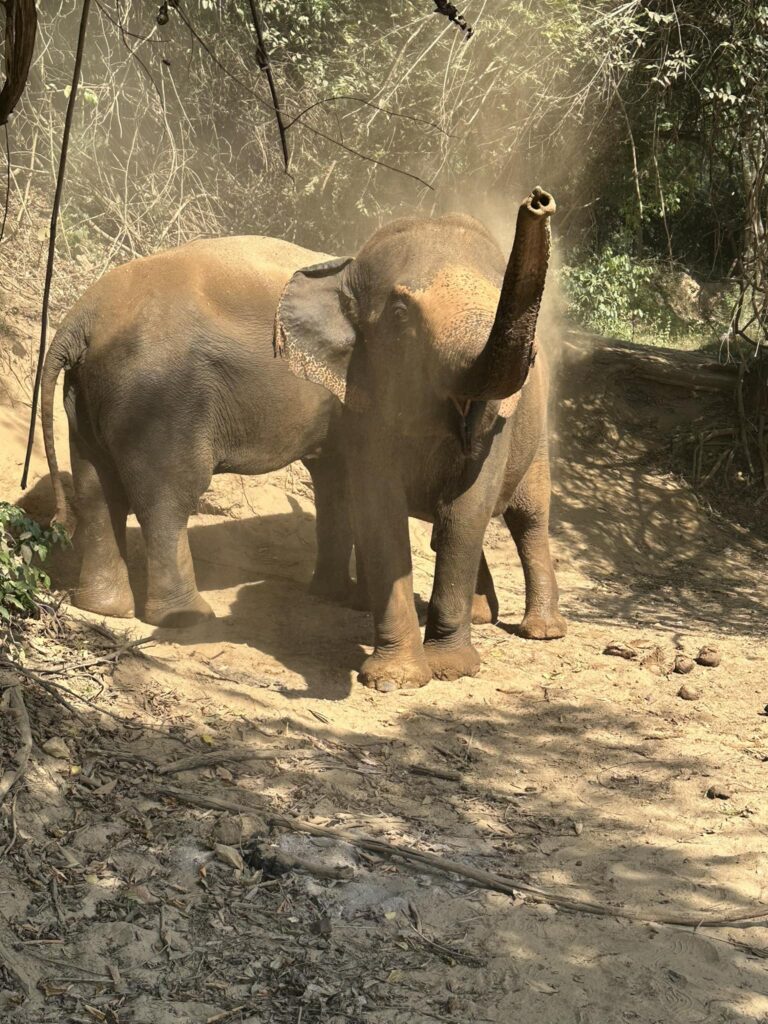
The trunk is one of the elephant’s most remarkable features, used for eating, drinking, lifting objects, and sensing smells. Elephants have an extremely advanced sense of smell, far superior to that of humans. When an elephant raises its trunk to sniff a visitor, it is “getting to know” you and assessing whether you are friendly.
If the trunk moves gently and then lowers, it usually means the elephant has accepted you. But if the trunk is raised high, forcefully blows air, or sprays water, this is a clear warning to back away. Experts recommend standing still and avoiding sudden movements so the elephant can remain calm and in control.
Elephant Sounds, Communication Beyond Words
In addition to body language, elephants communicate through sound. Low, gentle rumbling, similar to a cat’s purring, is a sign of comfort and contentment. This sound is often heard when elephants are eating, resting, or spending time with their family. These low-frequency sounds can travel long distances, helping herd members stay connected.
On the other hand, loud trumpeting or deep roaring usually signals fear, stress, or anger. Visitors should never respond with loud noises, as this may further alarm the elephant and escalate the situation.
Understanding Elephants for Sustainable Travel
Learning to read elephant body language not only enhances visitor safety but also reflects genuine respect for wildlife and nature. In Thailand, where many elephants live in conservation centers, responsible tourism plays a vital role in improving elephant welfare and supporting local communities.
Experience something truly special at Elephant Haven Kanchanaburi by slowing down and observing elephant body language through their ears, tails, trunks, and voices. You may discover that “listening without words” is the heart of conservation travel, an experience that is deeply moving, warm, and unforgettable.