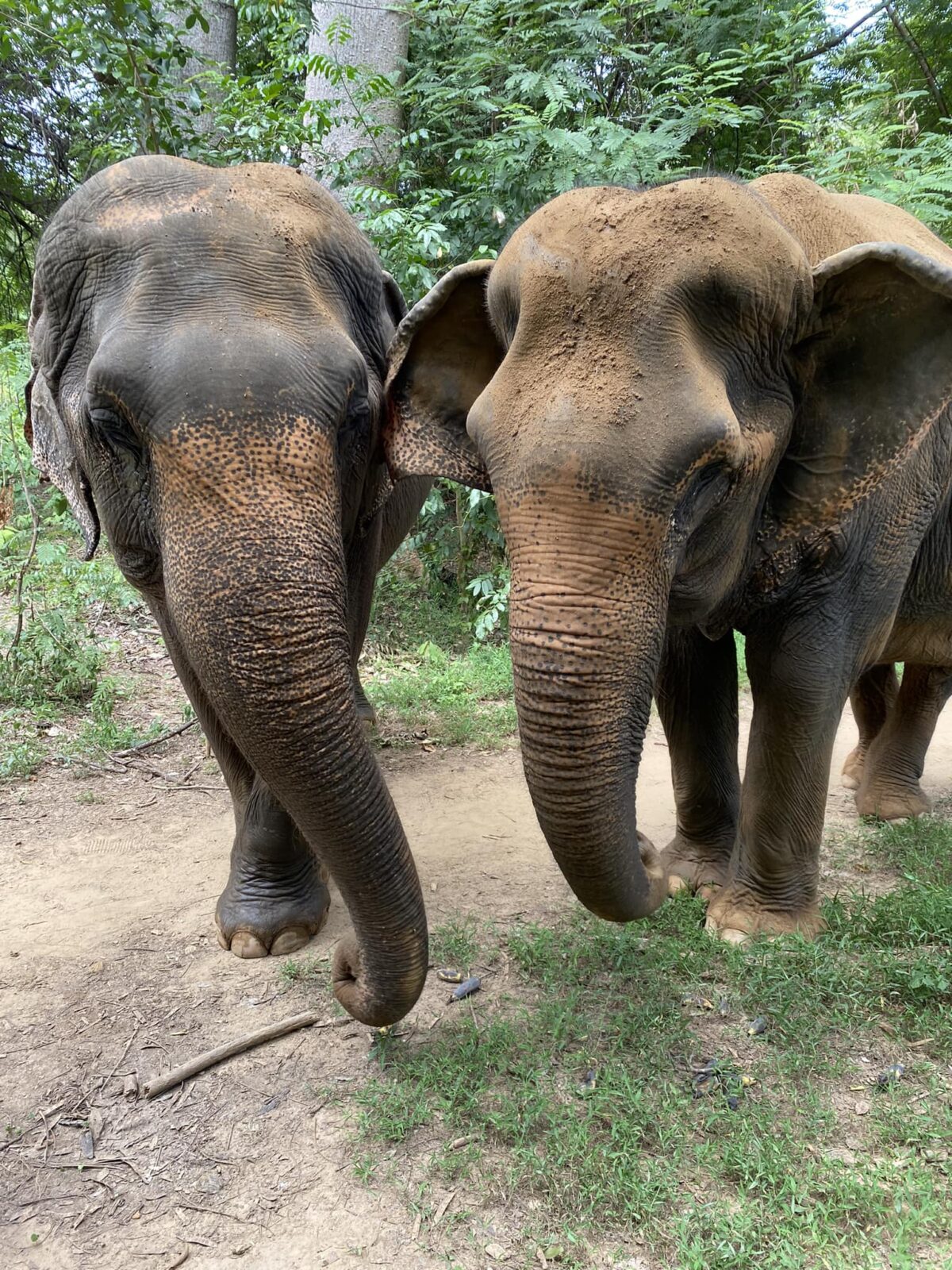
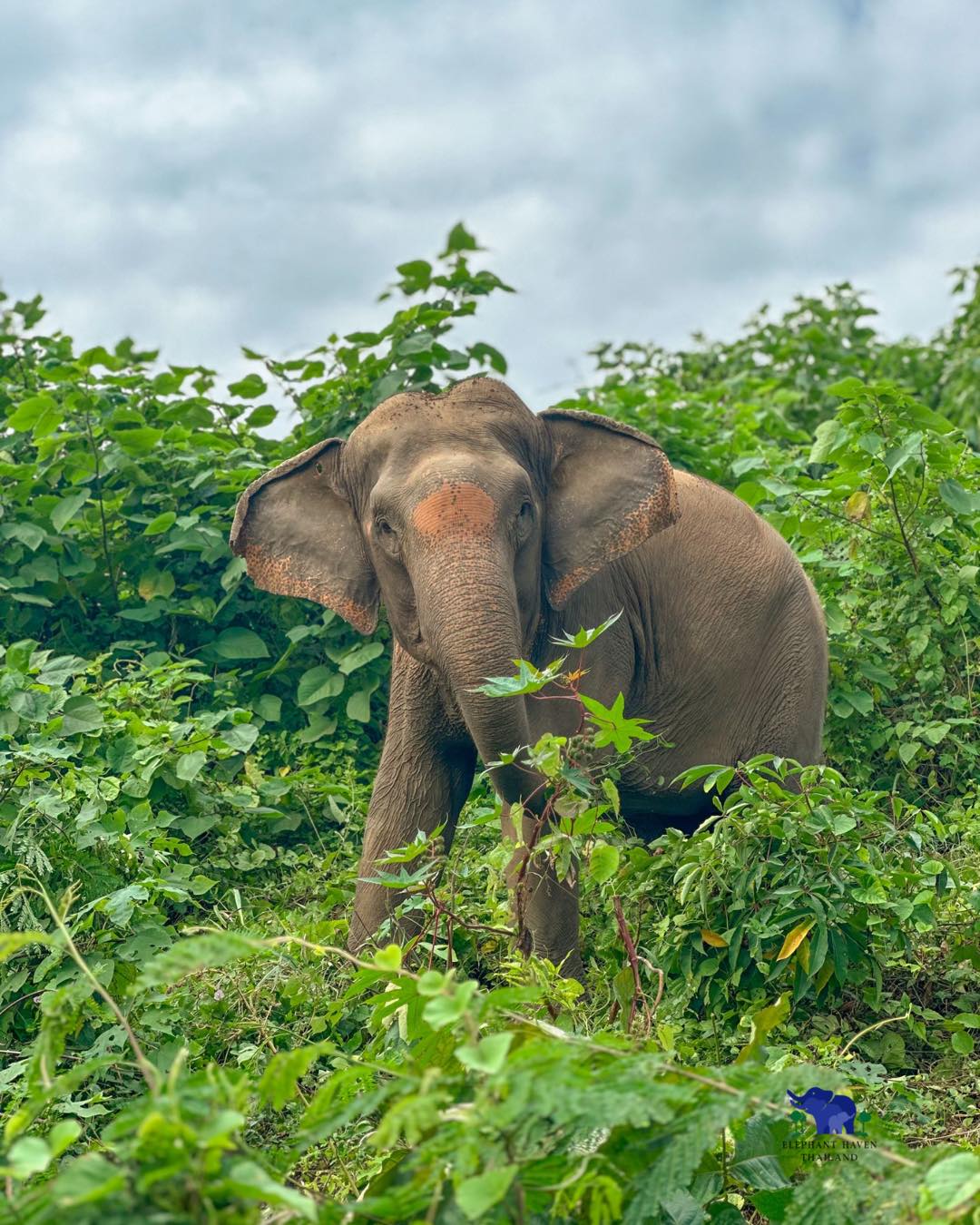
When you find yourself standing before a massive elephant in a sanctuary in Thailand, what captures your attention first is not merely its enormous size or its wise, soulful eyes. More often, it is the trunk, an extraordinary organ that moves with a life of its own.
It stretches, curls, sprays water, and explores the world with astonishing precision and grace.
Many people assume that an elephant’s trunk is simply an unusually long nose. In reality, it is one of the most sophisticated examples of biological engineering in the animal kingdom. The trunk lies at the heart of an elephant’s intelligence, survival, and social life. Here arefive remarkable facts about this incredible organ that may forever change the way you look at elephants.
Forty Thousand Muscles, Immense Power with a Gentle Touch
The human body contains roughly 600 muscles, but an elephant’s trunk alone is made up of an estimated 40,000 individual muscle units. Even more astonishing, it contains no bones whatsoever, only muscles, connective tissue, and nerves working in perfect coordination.
This structure classifies the trunk as a muscular hydrostat, allowing it to move freely in all directions. With it, an elephant can snap large branches or lift logs weighing over 250 kilograms. At the same time, the sensitive tip of the trunk, often described as having finger-like projections, can delicately pick up a single peanut or blade of grass from the ground.
When you feed a banana to an elephant, you can feel both the softness and strength of its trunk at once, a powerful reminder that nature is capable of combining brute force with remarkable finesse.
A High-Tech Nose, Seeing the World Through Scent
An elephant’s trunk functions as a supercomputer for smell. Scientists have discovered that elephants possess far more olfactory receptors than humans and even more than many scent-detection dogs.
This extraordinary sense of smell is essential for survival. During the dry season, wild elephants can detect water sources from several kilometers away or even sense water hidden deep beneath the ground. Smell also plays a crucial role in social communication.
By sniffing urine or dung, elephants can determine the emotional state, reproductive status, and identity of other members of their herd.
When you see an elephant lifting its trunk and gently waving it through the air, it is not simply posing. It is reading the invisible stories carried by the wind.
A Multi-Functional Tool Unlike Any Other
If humans rely on Swiss Army knives, elephants rely on their trunks. This single organ serves countless purposes, often simultaneously.
Elephants do not drink water directly through their trunks. Instead, they suck up water up to 8–10 liters at a time.and then spray it into their mouths t o drink. They may also shower themselves to cool down. When swimming across deep rivers, the trunk acts as a snorkel, allowing the elephant to breathe while its massive body remains submerged.
On hot days, elephants frequently spray mud or dust onto their skin using their trunks.
This natural coating works as sunscreen and insect repellent, with the trunk acting as a perfectly controlled paintbrush.
Watching an elephant skillfully manage its own body with its trunk is clear evidence of intelligence, adaptability, and learned behavior.
A Language of Touch, Emotional Bonds Through the Trunk
In elephant society, touch is just as important as sound. The trunk is a powerful tool for expressing emotion and strengthening social bonds.
When close companions reunite, they often intertwine their trunks, a gesture comparable to a human hug or handshake. Mothers gently stroke their calves with their trunks to comfort and reassure them when they are frightened.
For visitors to ethical sanctuaries, observing a caretaker calmly interacting with an elephant through gentle trunk contact is a moving illustration of trust built across species. The trunk is not merely a tool for survival. It is a bridge of emotional connection.
The Trunk Is Life
An elephant’s trunk is far more than an anatomical feature. It is essential to survival. Without it, an elephant cannot eat, drink, socialize, or communicate effectively.
By observing elephants calmly in ethical, sustainable sanctuaries, we come to understand that they do not need to paint pictures or perform tricks to demonstrate intelligence. Every movement of the trunk, picking up grass, spraying water, or reaching out to another, is already a breathtaking performance shaped by evolution.